
Architectural Photography of the Tempe Municipal Building
Finding the Right Angles for Civic Design in Extreme Conditions
On a 103-degree day in Tempe, Arizona, I set out to photograph one of the city’s most iconic civic buildings—the Tempe Municipal Building, designed by the architects Kemper and Michael Goodwin and completed in 1971.
This was a personal project focused on a simple goal: to create a small set of images that interpret the building the way I believe it was intended to be experienced—through form, light, environment, and function.
If you'd rather watch me ramble about the project than read a nicely written article, you can check out the video here.
Understanding the Building
The Tempe Municipal Building is a unique piece of civic architecture. Its inverted pyramid form is not just a visual statement, but also a functional response to Arizona’s harsh desert climate.
The geometry of the building helps shade different sections of the façade, making it highly responsive to sunlight while still maintaining a bold sculptural presence in downtown Tempe.
Beyond form and function, the building represents civic identity and community. It sits centrally within the city and was designed as a public anchor connecting people to local government and civic space.
These ideas guided how I approached the shoot.
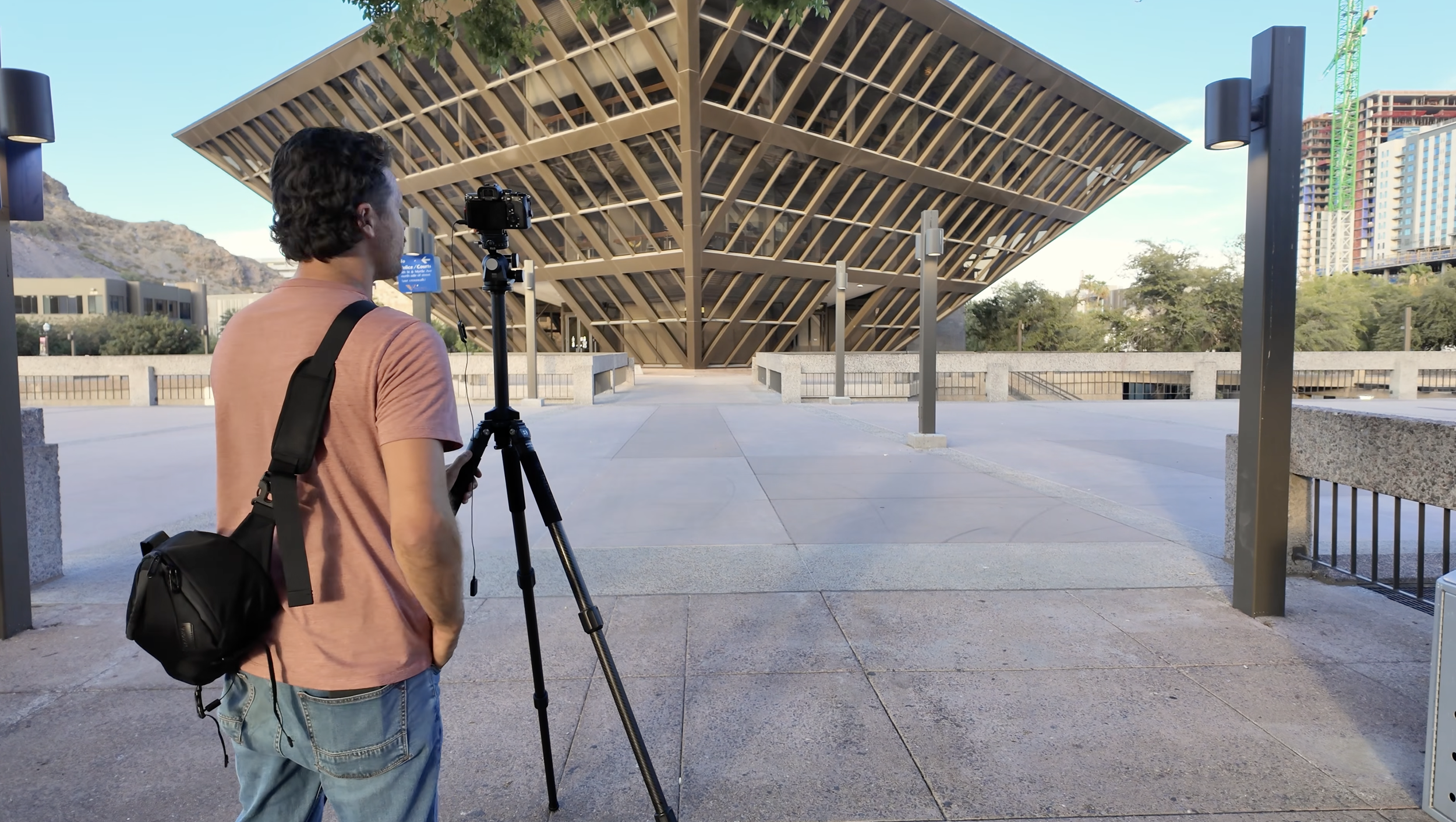
Setting up the Hero Image
The Concept: Four Images That Tell the Story
Rather than documenting everything, I limited myself to four intentional images:
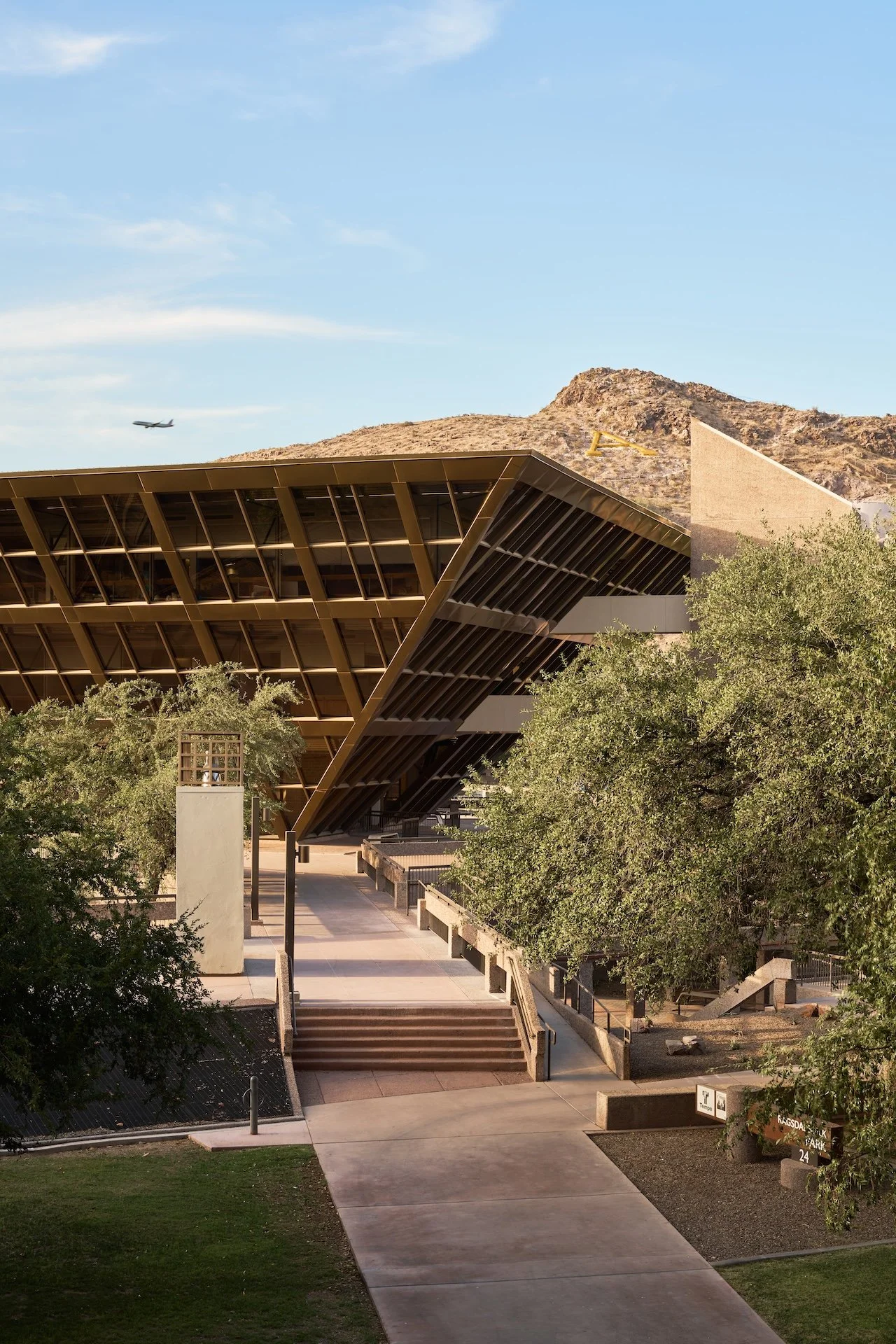
A detail image connecting the architecture to its sunken garden level
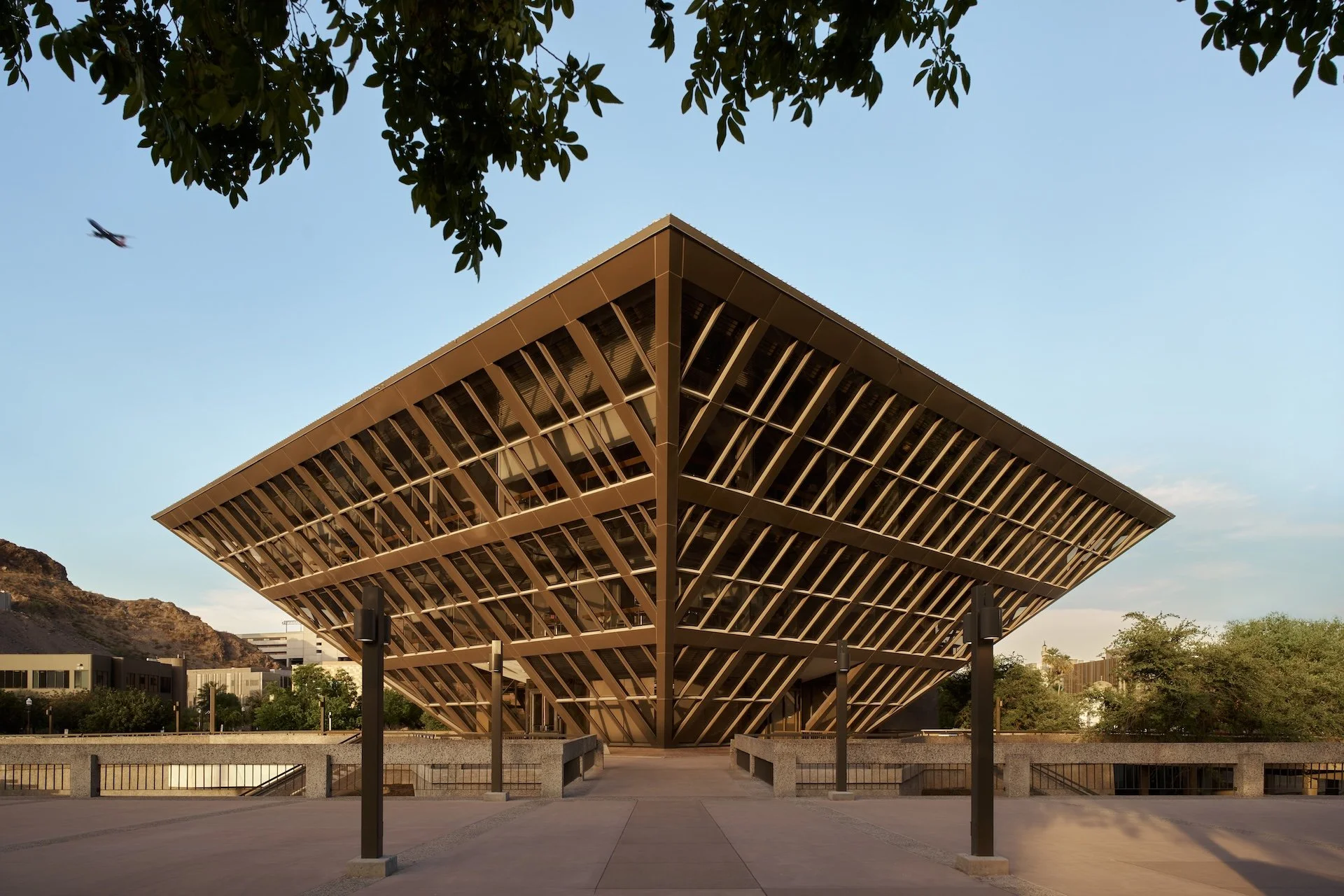
A hero image defining the building’s primary architectural expression
An environmental image placing it within downtown Tempe
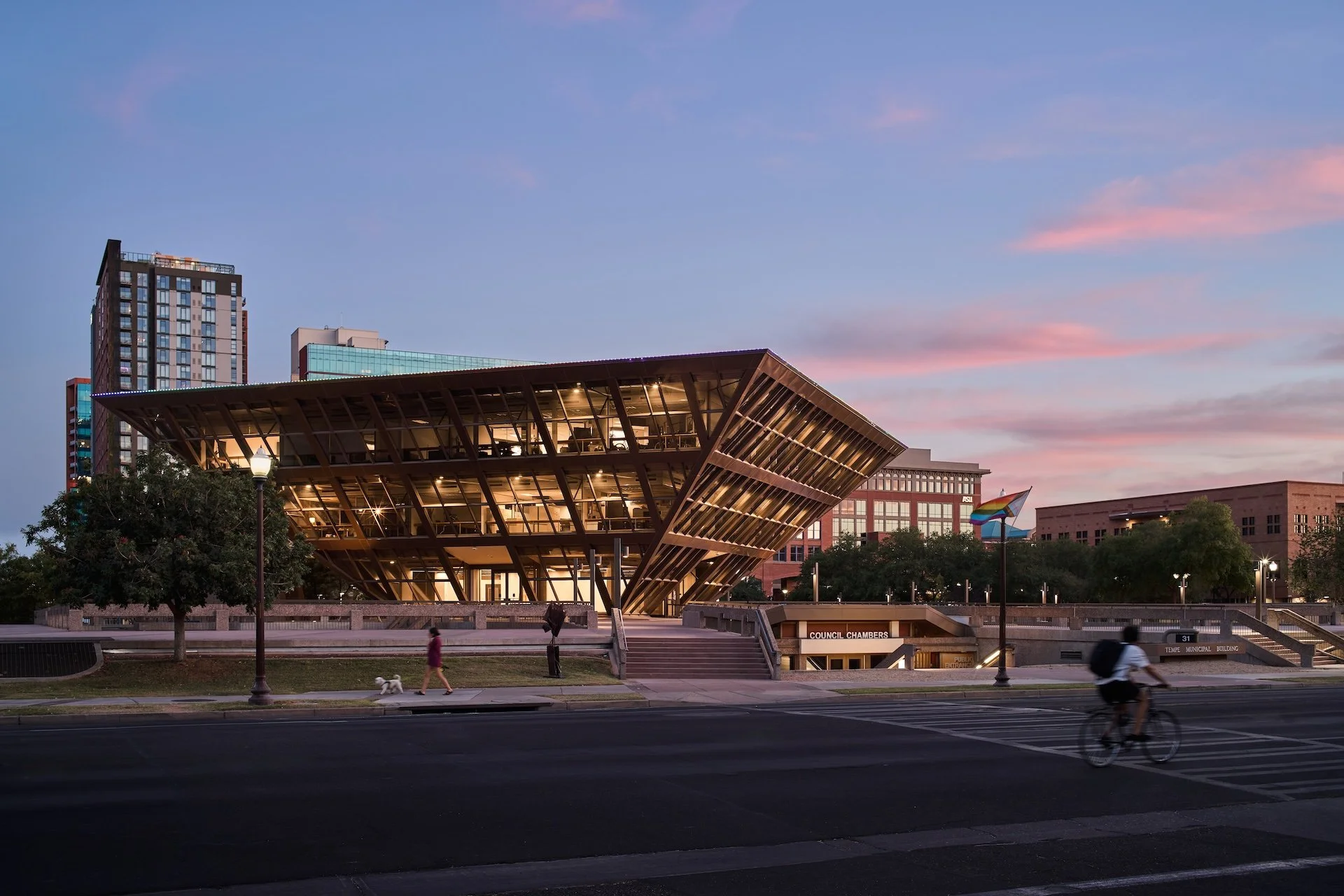
An interpretive image reflecting how the architect might have intended the space to be read
This structure helped me stay focused on interpretation rather than documentation.
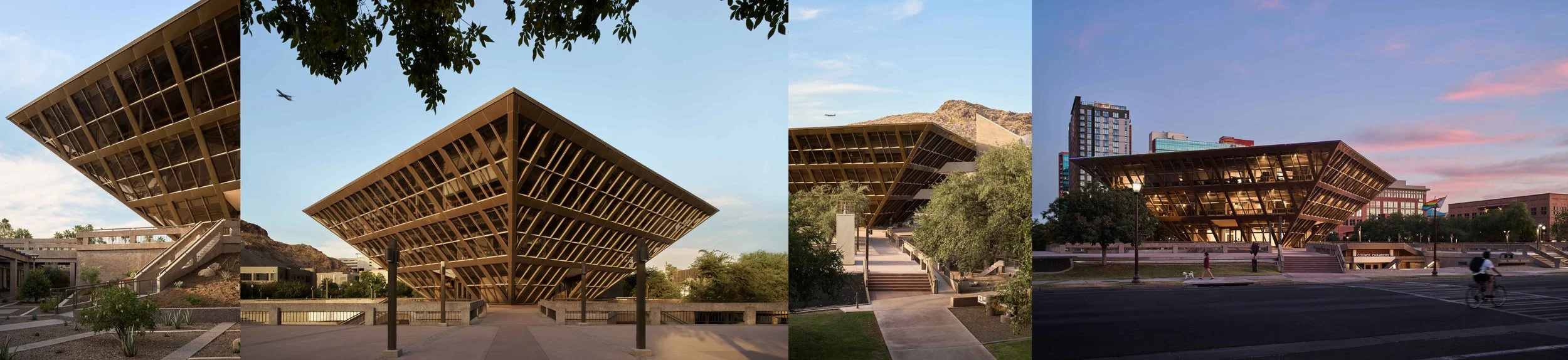
Working Through Real-World Constraints
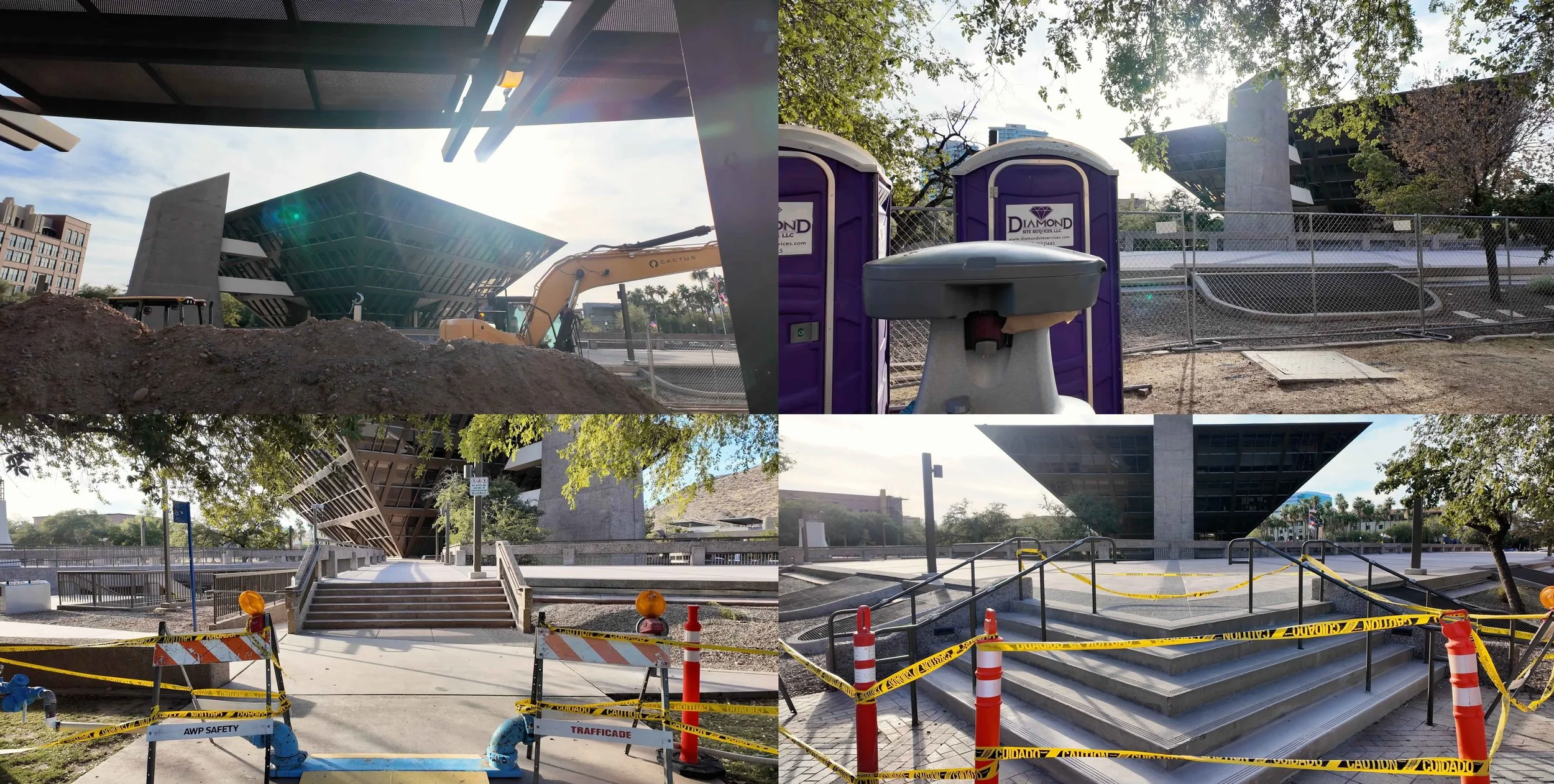
The reality of the shoot was far from ideal.
Construction surrounded multiple sides of the building. Landscaping was affected by extreme heat. And there were very few people interacting with the space, which made it harder to convey scale and civic activity.
These constraints forced a more adaptive approach: tighter compositions, careful framing, and selective use of post-production to remove distractions where necessary.
In many ways, this reflects real-world architectural photography conditions, where perfect environments are rare.
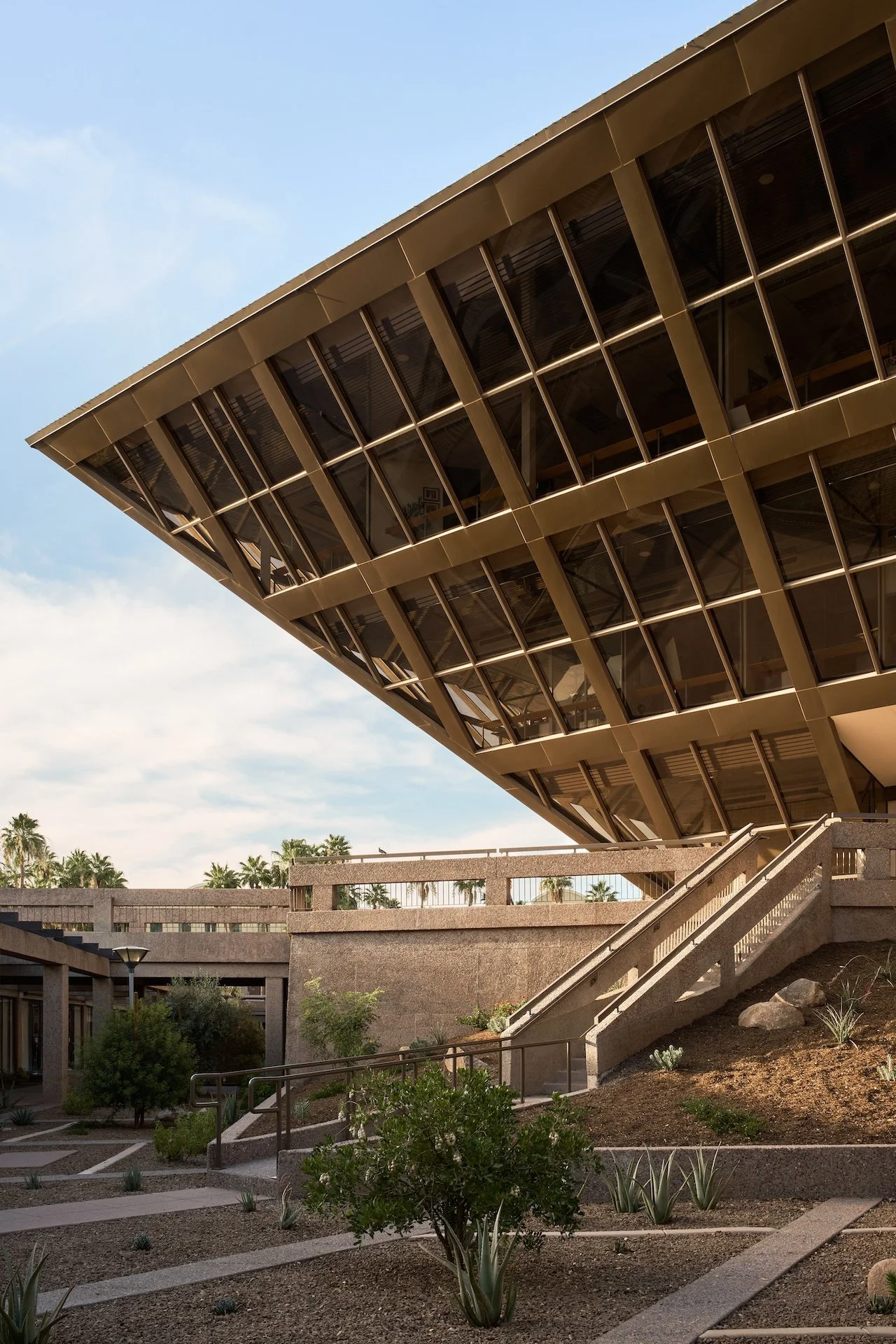
Detail Image
Finding the Detail Image
One of the key challenges was creating a detail image that connects both levels of the building—the inverted pyramid above and the sunken garden below.
I found a slightly elevated position that allowed me to visually compress both architectural layers into a single vertical composition.
This image became about connection: architecture above, landscape below, and the relationship between built form and environment.
The Environmental Perspective
One of the goals was to place the building within its broader urban context.
From an elevated position, I attempted to frame the structure against the surrounding city and mountain backdrop. While the full silhouette of the building was difficult to capture cleanly, the perspective still helped establish its relationship to the Tempe landscape.
The Environmental Image
Ultimately, this became a balance between context and clarity—showing where the building exists without losing the strength of its form.
Choosing the Hero Angle
After walking the site and testing multiple viewpoints, I eventually settled on a front-facing angle that clearly defines the inverted pyramid form.
Earlier compositions were interrupted by visual barriers that broke the reading of the structure. Once I moved around the site, it became clear where the building’s strongest hero perspective truly was.
This final angle emphasizes symmetry, massing, and the bold geometry that defines the architecture.
Interpreting the Architect’s Intent
One of the more interesting aspects of this project is understanding how the building was conceived.
Michael Goodwin has shared that the design concept originated from observing how light entered a space and how that could be translated into architectural form. That observation became an early sketching exercise that evolved into the inverted pyramid concept.
That relationship between light, geometry, and environmental response became central to how I approached the final twilight image.
At sunset, the building takes on a different character—almost like a civic lantern—glowing against the darkening sky. This became one of the most expressive moments of the entire shoot.
Reflection on the Shoot
In hindsight, the biggest challenge was timing.
The extreme summer heat affected everything: vegetation, human activity, and overall environmental quality. Shooting this building at a different time of year would likely produce stronger supporting context and more dynamic interaction with the space.
Still, working within those constraints reinforced an important part of architectural photography: adaptability.
Despite the limitations, I was able to produce a set of images that represent:
The structure’s form
Its relationship to the city
Its connection to landscape
And its intended architectural presence
Hero Image
Final Evaluation
If I had to evaluate the set:
Detail image: Strong conceptual connection between architectural layers
Environmental image: Limited by site conditions but successful in context
Hero image: Clear and solid representation of form and massing
Twilight image: Strongest interpretation of atmosphere and intent
Overall, I would rate the project a B to B- given the constraints, with clear opportunities to revisit under better seasonal conditions.
Interpreting the Architect’s Intent Image
Closing Thoughts
This project reinforced something I continue to find in architectural photography.
The strongest images rarely come from perfect conditions—they come from solving problems on site while staying true to the architect’s intent.
I may revisit this building in the future under different seasonal light, but for now, this set represents a complete interpretation of one of Tempe’s most important civic structures.
Feel Free to leave a comment and Ill be sure to answer!
